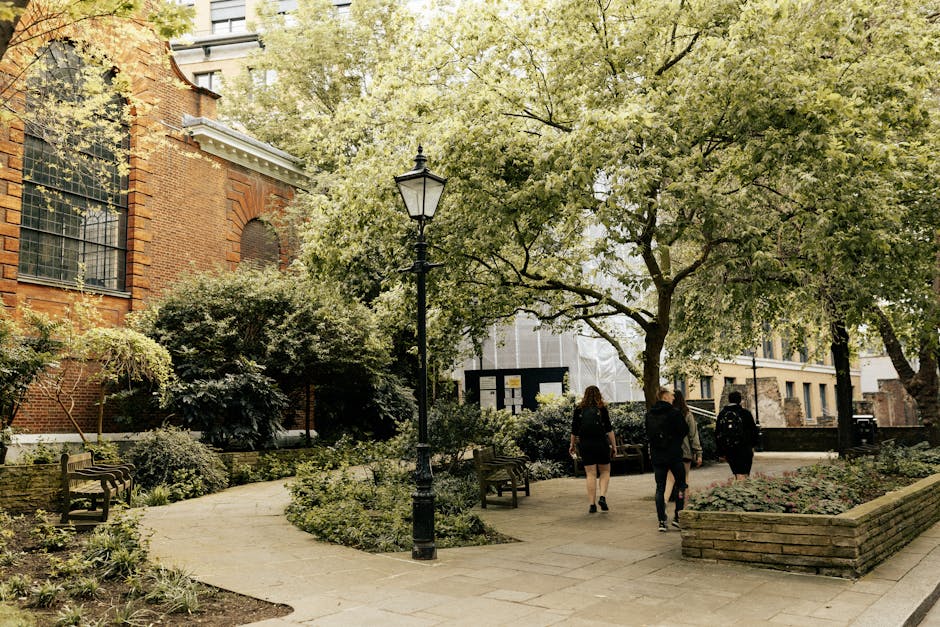
Victoria Street garden maintenance guide for Westminster gardens
Gardens around Victoria Street in Westminster have their own rhythm. Some are compact courtyard spaces tucked behind period buildings; others are narrow front gardens, roof terraces, or shared planting areas that need a careful hand rather than a heavy one. This Victoria Street garden maintenance guide for Westminster gardens is designed to help you keep those spaces healthy, tidy, and looking good through the year without overcomplicating it.
If you live, work, or manage property near Victoria Street, the basics are familiar: limited space, a mix of sun and shade, pollution from traffic, wind tunnels between buildings, and the usual London pressure of keeping everything presentable. Truth be told, a garden like this does not respond well to guesswork. It rewards consistency, light-touch maintenance, and a clear plan.
Below, you will find a practical guide to what maintenance actually involves, why it matters in Westminster, how to approach it step by step, and when it makes sense to bring in professional help. You will also find useful comparisons, a checklist, and answers to the questions people tend to ask once they realise a small London garden can still be surprisingly demanding.
Why Victoria Street garden maintenance guide for Westminster gardens Matters
Victoria Street is a busy part of Westminster, and that changes how gardens behave. Dust settles faster. Containers dry out more quickly in summer. Leaves blow into corners and drains. Shaded plots can become damp and mossy. Even a well-designed planting scheme can start looking tired if it is not checked regularly. That is why a focused maintenance routine matters more here than in a larger suburban garden.
In Westminster, a garden often does more than provide greenery. It shapes first impressions. It softens a frontage, gives residents somewhere to pause, and can lift an entire property if it is looked after properly. A neglected garden can do the opposite very quickly. A few weeds in a border are one thing; a month of missed care in a visible central-London setting is another.
There is also a practical side. Regular maintenance helps you spot problems early: compacted soil, failing irrigation, pests on new growth, pots that have cracked in a frost, or climbers that have started to overwhelm windows and gutters. Catching issues early is almost always cheaper and less stressful. That part is not glamorous, but it is true.
Expert summary: In Victoria Street gardens, the best results usually come from steady, seasonal care rather than dramatic interventions. Small, regular tasks beat big rescue jobs nearly every time.
How Victoria Street garden maintenance guide for Westminster gardens Works
Garden maintenance is not one single task. It is a routine made up of smaller jobs that work together. Think of it as keeping the garden balanced rather than constantly "fixing" it. In a Westminster setting, that balance usually means controlling growth, preserving shape, supporting plant health, and making sure the space still looks deliberate rather than accidental.
The practical work normally falls into a few categories:
- Tidying and cleaning: removing litter, leaves, spent flowers, and dead growth.
- Pruning and trimming: keeping shrubs, climbers, hedges, and topiary in proportion.
- Weed control: stopping unwanted plants from taking hold in borders, paving, and containers.
- Soil and plant care: feeding, mulching, watering, and improving poor growing conditions.
- Pest and disease checks: spotting trouble before it spreads.
- Seasonal refreshes: replanting, edging, and replacing tired specimens where needed.
In many city gardens, maintenance is also about scale. A mature wisteria on a narrow terrace can become a problem if it is not trained properly. A raised planter can fail fast if drainage is poor. A shade-loving border can look sparse in one month and jungle-like in the next. So the work is less about brute force and more about observation. You look, then act. That simple order matters.
If you are arranging professional support, it helps to understand the scope of service up front. A full garden maintenance programme is different from a one-off tidy-up. For a clearer picture of wider options, you can review the garden services overview and, when you are ready to discuss your own space, use the contact page to start the conversation.
Key Benefits and Practical Advantages
Good maintenance is not just about appearances, although let's face it, that is part of it. The real advantages run deeper and usually show up over time.
- Better plant health: Regular pruning, feeding, and watering help plants recover from stress and grow more evenly.
- Reduced long-term cost: Preventive care is usually less expensive than replacing failed planting or repairing neglected areas.
- Safer access: Clear paths, firm edges, and tidy surfaces reduce slip and trip hazards.
- Improved privacy and comfort: Managed hedges and climbers can create a calmer, more usable space.
- Higher visual value: A neat garden can materially improve how a property feels, especially in a prominent street-facing location.
- Less seasonal stress: You will not be scrambling every time growth surges in spring or the weather turns dry in midsummer.
There is another benefit that gets overlooked: confidence. When the space is under control, you stop worrying about what the garden looks like from the pavement or whether the back area has become a chore. That matters more than people admit. A garden should feel like part of the property, not a problem hanging off the side of it.
For landlords, property managers, and businesses near Victoria Street, regular maintenance also helps support a professional image. In a central Westminster setting, that can be just as important as the planting itself.
Who This Is For and When It Makes Sense
This guide is useful for a few different kinds of readers, and the details matter because each one has different priorities.
- Homeowners: if you want a manageable garden that stays attractive without becoming a weekend burden.
- Flat owners with shared spaces: if a courtyard, terrace, or communal planting area needs regular care and a bit of coordination.
- Landlords and letting agents: if outdoor space affects presentation, tenant satisfaction, or viewing quality.
- Businesses and offices: if planters, entrance beds, and roof-level planting need to look tidy for staff and visitors.
- Busy households: if you simply do not have the time or tools to keep on top of seasonal growth.
It makes sense to prioritise maintenance when the garden is visible from the street, used by guests or tenants, or planted with species that need regular shaping. It also makes sense after a renovation or replanting job, when new work needs care to establish properly. Skipping the aftercare is a classic mistake. Planting day is not the finish line. It is the start.
Some people prefer a one-off clear-up before a special event or property listing. Others want a routine visit every few weeks. Both are valid. The right choice depends on how much time you have, how ambitious the planting is, and how much pressure the space is under from shade, wind, or foot traffic.
Step-by-Step Guidance
Here is a practical way to approach maintenance in a Westminster garden without making it feel like a second job.
1. Start with a proper visual check
Walk the garden slowly. Look for weeds, dead stems, yellowing leaves, blocked drainage, broken pots, and anything that seems out of proportion. Check both the obvious parts and the awkward corners. The back of a bed, the edge behind a bin store, the base of a hedge - that is where small problems like to hide.
2. Clear the obvious clutter first
Remove fallen leaves, litter, dead flower heads, and any loose debris. In city gardens, this gives you an immediate reset. You can suddenly see the structure again. If you have paving or decking, sweep thoroughly and clear moss or slippery growth before it builds up.
3. Weed before you prune in most cases
Weeding first makes sense because it helps you see what the plants actually need. Some weeds are shallow and easy to pull after rain; others root into joints or borders and need a more careful approach. Be gentle around established perennials, especially in tight beds where everything is close together.
4. Prune with the shape in mind
In compact Westminster gardens, pruning is often about restraint. You are trying to keep airflow, daylight, and shape. Cut back crossing stems, remove dead material, and reduce overhang where it blocks paths or windows. Do not hack away just because something looks untidy. A plant can look sparse for a few weeks after a heavy cut and then settle beautifully; or, if cut too hard, it can sulk. Plants are like that sometimes.
5. Feed and mulch where needed
Many central London gardens have tired or shallow soil, especially where the ground has been disturbed by previous building work. A light top-up of compost or mulch can help retain moisture and improve structure. Use it thoughtfully. Too much, and you risk smothering crowns or creating a damp, messy layer that does more harm than good.
6. Water with a purpose
Water deeply rather than constantly sprinkling the surface. Container plants usually need more attention than border plants because they dry out faster, especially in sunny or sheltered spots near brick walls. Early morning or evening watering is usually more efficient than watering in the heat of the day. You will notice the difference on hot afternoons when the paving feels like a radiator.
7. Check supports, ties, and edging
Loosened ties, leaning canes, damaged trellis, and broken edging can make a garden look tired very quickly. They can also lead to damage if stems rub or collapse. A five-minute inspection can save a lot of nuisance later.
8. Finish with a tidy review
Step back and look at the whole space. Does anything look overcrowded, unbalanced, or half-finished? This final glance is often where you catch the thing your hands missed. It sounds simple, but it works.
Expert Tips for Better Results
Experience tends to reveal the same lessons over and over. Not dramatic lessons. Just the practical ones that save time and preserve the garden.
- Work little and often: a quick monthly touch-up usually does more than one huge clean-up every six months.
- Match plants to the site: a shady, windy courtyard needs different planting choices than a sheltered south-facing terrace.
- Keep access in mind: in narrow gardens, the best maintenance plan is one that does not require constant moving of pots, furniture, and tools.
- Watch drainage after rain: puddles tell you more than plant labels do.
- Prune for light, not just shape: especially in city gardens, a little extra daylight can change the feel of the whole space.
- Leave room for growth: many gardens become cramped because everything looked fine at planting stage and no one planned for year two.
Here is a small one that catches people out: if you only ever tidy the visible front of the garden, the back will quietly unravel. Then, by the time you notice, it feels like a big job. It is rarely a big job at the beginning.
And yes, there is always that one shrub that grows in a way no one predicted. Nature does enjoy being slightly inconvenient.
Common Mistakes to Avoid
Most garden problems are not dramatic. They are the result of small habits repeated over time.
- Overpruning: taking too much off at once can weaken plants and leave the garden looking bare.
- Ignoring container plants: pots need more frequent attention than borders, especially in warm or exposed spots.
- Letting weeds seed: one missed week can become a longer issue, particularly in paving joints and gravel.
- Using the wrong mulch or feed: not every product suits every plant or soil type.
- Forgetting aftercare: fresh planting, hard pruning, or a tidy-up is only half the job.
- Leaving dead stems too long: this can make borders look neglected and may harbour pests or disease.
- Not planning for seasonal change: a garden that looks fine in April may struggle in July if no one has prepared it.
A lot of these mistakes come from trying to save time. Ironically, they usually create more work later. The neat solution is to set a realistic maintenance rhythm and stick to it, even if it is not perfect.
Tools, Resources and Recommendations
You do not need a shed full of specialist equipment to maintain a city garden properly, but you do need the right basics. In small Westminster spaces, the tools you choose should be compact, reliable, and easy to store.
| Tool or resource | Best use | Why it helps in Victoria Street gardens |
|---|---|---|
| Hand pruners | Deadheading, light pruning, shaping | Good for precise work in tight planting schemes |
| Loppers | Thicker stems and small branches | Useful when shrubs begin to outgrow narrow spaces |
| Fork or hand fork | Loosening compacted soil, removing weeds | Helps in older beds where soil has become tight |
| Lightweight rake or broom | Leaf collection and surface clean-up | Ideal for paving, gravel, and small borders |
| Watering can or hose with control | Precise watering | Makes it easier to avoid waste and runoff |
| Mulch or compost | Soil improvement and moisture retention | Supports stressed soils common in urban settings |
If you are arranging professional maintenance, it is sensible to look at the provider's approach to safety, payment, and waste handling. For example, you may want to review health and safety guidance, insurance and safety information, and recycling and sustainability practices before work begins. Those pages help set expectations in a straightforward way.
For service planning and next steps, the practical pages are usually the most useful: pricing and quotes, services overview, and about us if you want to understand the team behind the work. No drama, just clarity.
Law, Compliance, Standards, or Best Practice
For most domestic garden maintenance, the main compliance issues are practical rather than legal: safe use of tools, careful handling of waste, and respect for shared access or neighbouring properties. If the space is communal, leasehold, rented, or managed by a building team, it is sensible to confirm responsibilities before major work begins.
In the UK, good practice usually means:
- working safely around paths, steps, and wet surfaces;
- using appropriate protective equipment where needed;
- disposing of green waste responsibly;
- avoiding damage to shared structures, drains, or boundaries;
- keeping noise and access disruption reasonable for neighbours;
- checking whether any plants or trees need extra care before cutting.
If you are hiring someone to work on your garden, it is reasonable to ask how they manage risk, waste, and payment. A transparent provider should be able to explain this without fuss. For further reassurance, you can also look at the site's terms and conditions and payment and security information. If an issue ever arises, a clear complaints procedure is also a sign of a well-run business.
One practical note: if your garden is part of a building with shared access, be considerate about timing and movement of equipment. It avoids awkwardness, and awkwardness in a narrow hallway is never fun.
Options, Methods, and Comparison Table
There is no single "best" way to maintain a Westminster garden. The right method depends on how much time you have, how visible the space is, and how complicated the planting is. Here is a simple comparison.
| Method | Best for | Advantages | Trade-offs |
|---|---|---|---|
| DIY weekly upkeep | Small, simple gardens | Low cost, flexible, hands-on control | Needs discipline and time |
| DIY seasonal resets | Gardens that only need periodic attention | Good for tidying and replanting | Can get overwhelming between visits |
| Professional routine maintenance | Busy households, landlords, businesses, or complex planting | Consistent care, fewer missed issues, better finish | Higher ongoing cost |
| One-off clean-up with follow-up plan | Overgrown or neglected spaces | Fast improvement, useful reset point | Needs follow-through or the garden slips back |
In practice, many people in Westminster end up with a hybrid approach: a professional tidy-up, then light DIY maintenance between visits. That is often the sweet spot. It keeps standards high without making life overly complicated.
Case Study or Real-World Example
Take a typical Victoria Street courtyard garden: small footprint, a couple of shaded borders, two large planters, paving that catches leaf debris, and a climbing plant near the wall that has started to wander. On paper, nothing unusual. In reality, the space can look messy surprisingly quickly if it is left alone for a couple of months.
The first visit usually focuses on clearing, checking, and restoring shape. Dead foliage comes out, weeds are removed from borders and paving joints, pots are refreshed, and the climber is tied back neatly. After that, the garden starts to breathe again. Daylight reaches the lower planting, the paving feels less slippery, and the whole space reads as intentional rather than simply occupied.
The follow-up is where the real value appears. A lighter second visit a few weeks later can deal with new weed growth, check watering, trim anything that has surged, and make sure the planting is settling properly. That second look is often where a garden goes from "tidied" to "well maintained".
It sounds almost too simple, but the pattern is common. A little consistency transforms the result. Not magic. Just care, repeated.
Practical Checklist
Use this checklist if you want a quick, sensible way to stay on top of a Westminster garden near Victoria Street.
- Remove litter, fallen leaves, and dead plant material.
- Check paths, paving, steps, and access points for moss or slippery growth.
- Pull weeds before they set seed.
- Deadhead flowering plants where appropriate.
- Prune damaged, crossing, or overextended growth.
- Water containers and dry beds deeply when needed.
- Inspect supports, ties, trellis, and edging.
- Top up mulch or compost if the soil is tired.
- Look for early signs of pests or disease.
- Review whether the garden still suits the space and season.
- Plan the next visit before the garden gets out of hand.
Quick takeaway: the best maintenance routine is the one you can repeat. Keep it simple, keep it seasonal, and do not let small jobs pile up until they become a bigger story than they needed to be.
Conclusion
A Victoria Street garden can be compact, elegant, practical, or all three at once, but it will nearly always benefit from regular, thoughtful maintenance. In Westminster, where outdoor spaces are often exposed to shade, traffic, wind, and tight layouts, the difference between "fine" and "great" is usually consistency. Not perfection. Consistency.
If you keep the basics under control - pruning, weeding, watering, cleanup, and seasonal review - the garden will reward you with better growth, less stress, and a space that feels properly looked after. And if the garden is too busy, too awkward, or simply too time-consuming to manage alone, professional support can save both time and guesswork.
For a straightforward next step, explore the site's service information, compare options, and if you need tailored support for your own Westminster garden, get in touch when you are ready.
Get a free quote today and see how much you can save.
There is something quietly satisfying about stepping back at the end of a tidy-up and hearing nothing but the rustle of leaves. That is the good kind of calm.
Frequently Asked Questions
How often should a Victoria Street garden in Westminster be maintained?
For most small city gardens, light attention every one to two weeks and a more thorough seasonal visit works well. Busy or highly visible spaces may need more frequent care, especially in spring and summer when growth speeds up.
What is included in regular garden maintenance?
Regular maintenance usually covers weeding, pruning, deadheading, hedge and shrub tidying, watering, sweeping, and general plant health checks. Depending on the garden, it may also include mulching, feeding, and small repairs to supports or edging.
Is professional garden maintenance worth it for a small courtyard?
Often, yes. Small gardens can be deceptively demanding because every plant and surface is visible. A professional visit can keep the garden tidy, prevent problems from building up, and save time if you are managing a busy schedule.
What are the most common problems in Westminster gardens?
Common issues include shade, compacted soil, fast-drying containers, wind exposure, pollution dust, moss on hard surfaces, and rapid weed growth in paving or borders. These are normal urban-garden challenges, but they do need regular attention.
Can I maintain a Westminster garden myself?
Yes, if the space is small and you are happy to stay consistent. DIY maintenance works best when the garden is simple, the planting is manageable, and you have the right tools. If it has become overgrown or complex, a professional reset can help.
When is the best time of year for garden maintenance?
There is useful work to do all year, but spring and early autumn are especially important. Spring brings a surge of growth, while autumn is the time to manage leaf fall, tidy tired planting, and prepare for colder weather.
How do I keep pots and planters healthy near Victoria Street?
Use compost that suits the plants, water deeply rather than superficially, check drainage, and refresh tired soil regularly. Container planting dries out faster in sunny or sheltered spots, so it usually needs closer attention than borders.
What should I ask before hiring a gardener?
Ask what is included, how often visits are recommended, how waste is handled, what safety measures are used, and how pricing works. It also helps to ask whether the gardener has experience with compact urban gardens and shared access spaces.
Do I need to worry about safety or insurance?
Yes, especially if the work involves ladders, heavier tools, or shared areas. It is sensible to confirm that any provider follows suitable safety practices and has appropriate insurance. That is simply good housekeeping, really.
How can I tell if my garden needs a full tidy-up rather than routine care?
If weeds have spread, shrubs are misshapen, paths are slippery, and planting has lost its structure, the garden probably needs a full tidy-up first. Routine care is then easier to maintain once the space has been reset.
What is the easiest way to keep a garden looking presentable between visits?
Focus on the visible basics: sweep regularly, remove dead flowers, pull obvious weeds, and water containers before they dry out too much. A small amount of steady attention usually keeps the whole garden looking better than you might expect.
Where can I find more information about your services?
You can review the services overview, check pricing and quotes, or visit the contact page if you are ready to discuss your garden. If you want to understand the company background first, the about us page is a sensible place to start.